Projects
All of Us
This project brings together migrant women from the Global Majority living in London to explore how they navigate direct and indirect forms of intersectional gendered violence, and how they build resistance, activism, care and connection to challenge these experiences over time.
At the heart of the project are 22 migrant and migrant-heritage women from ten countries, who came together not only to share their experiences but to shape the project themselves. As peer researchers, they brought their stories, knowledge, creativity and perspectives into the process.
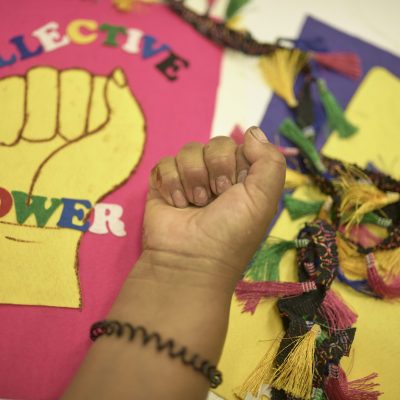
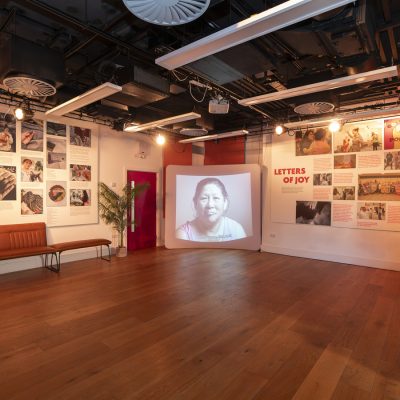
Through arts-based workshops, conversations and embodied practices, we created spaces to explore difficult experiences while celebrating connection, solidarity and collective care. Together, we explored how individual experiences connect and how these connections can become sources of strength and resistance.
The project brought together King’s College London, Migrants in Action and the Visual Embodied Methodologies (VEM) network, combining creativity, lived experience and research.
Above all, the project celebrates the knowledge, creativity, strength and solidarity of migrant women, showing how coming together to share, create, listen and imagine can build belonging, amplify voices and create meaningful change.
Research
Building on this collective process, the research examined the forms of solidarity and care that emerged through the project.
It developed the concept of “weaving empathy-driven solidarity” to describe how women create and sustain connections through shared experiences, empathy and collective care, and identified “radical connection” as a way of understanding the deeper relationships and possibilities that can emerge through this process. The findings contribute to wider conversations about how arts-based and embodied approaches can generate knowledge, challenge dominant narratives and inform research, public engagement and policy.
Research Methods:
Nine participatory arts-based workshops
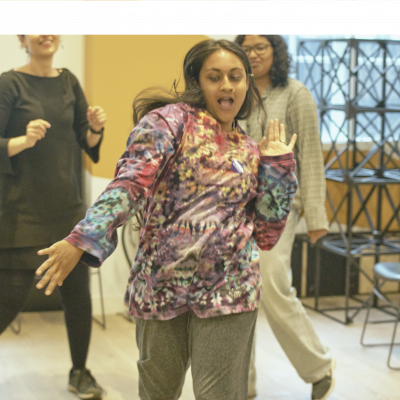
Participatory theatre
Photovoice
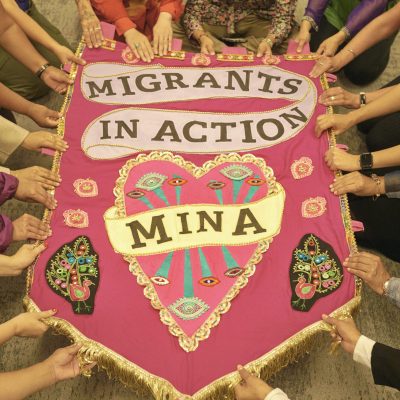
Banner-making
Semi-structured interviews
Visual and audio recording
“Lost & Found” reflection activities
Key Objectives
Explore how migrant women experience and respond to intersectional gendered violence in everyday life
Examine how migration, settlement, and belonging shape experiences of exclusion, discrimination, and care.
Identify forms of activism, resistance, and connection developed individually and collectively across generations.
Develop and test visual and embodied methodologies that support collaborative, participant-led research.
Generate evidence and creative outputs that can inform further research, spark discussion, and contribute to policy and practice.
Key Findings
Migrant women face intersecting forms of violence, including personal, structural, and everyday discrimination.
Migration journeys are complex, shaped by both survival (escaping violence) and aspirations for better futures.
Many experience unbelonging and exclusion in the UK, alongside ongoing inequality.
Women demonstrate strong agency and resistance through everyday resilience, activism, and creative expression.
The project fostered “radical connection”—deep bonds built through shared experiences, empathy, and solidarity.
Arts-based workshops created safe spaces for trust, reflection, and collective healing.
Creative methods (e.g. storytelling, photovoice) enabled collective care and co-produced knowledge.
Participants reported increased confidence, freedom, and a stronger sense of identity and community.
Gallery
Publications
Go to Publications Archive
Project by

Funded by

Economic and Social Research Council (ESRC) - reference: ESX0116661 - Visual and Embodied Methodologies for Imaging Intersectional Gendered Violence, through Principal Investigator Jelke Boesten (King’s College London)